

 On our sites
Buying guide
Choosing the right covering
Five criteria are enough to frame the choice of a floor, wall or ceiling. We go through them with you at the showroom; here is what you need to prepare the discussion.
-
1. Use and traffic
Home, office, shop, school, clinic, workshop: each premises imposes a use class (EN ISO 10874) and specific constraints: trolley traffic, heels, disinfectants, heavy loads.
See the relevant families :Antibacterial flooringPVC tileCarpet
-
2. Water and hygiene
Wet rooms, kitchens, sanitary blocks and healthcare environments need a waterproof floor, seamless or with welded seams, with an easy-to-disinfect surface treatment. Sheet PVC and LVT are the natural solutions; laminate is for dry rooms.
See the relevant families :Antibacterial flooringDecochoc antibacterial wall panelLVT vinyl flooring
-
3. Acoustic and thermal comfort
In offices, hotels and schools, carpet tiles and acoustic underlays reduce footfall noise (up to 20 dB and more depending on the product); rock wool ceilings absorb reverberation in meeting rooms and open-plan offices.
See the relevant families :CarpetSuspended ceiling
-
4. Building services
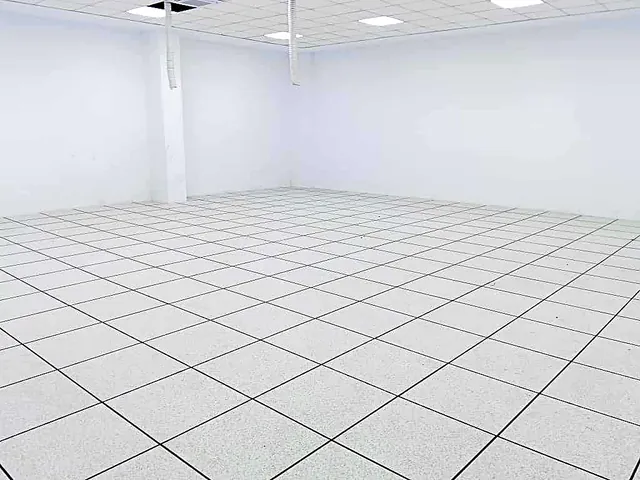
Server rooms, office floors and control rooms: raised access flooring routes cables and ducts under tiles that lift out with a suction tool. Demountable ceilings give the same access to overhead services.
See the relevant families :Raised access floorSuspended ceiling
-
5. Look and budget
Wood, stone, concrete, plain or patterned: the manufacturers’ collections cover every style. The overall budget includes supply, subfloor preparation, accessories and installation: a complete quote avoids surprises.
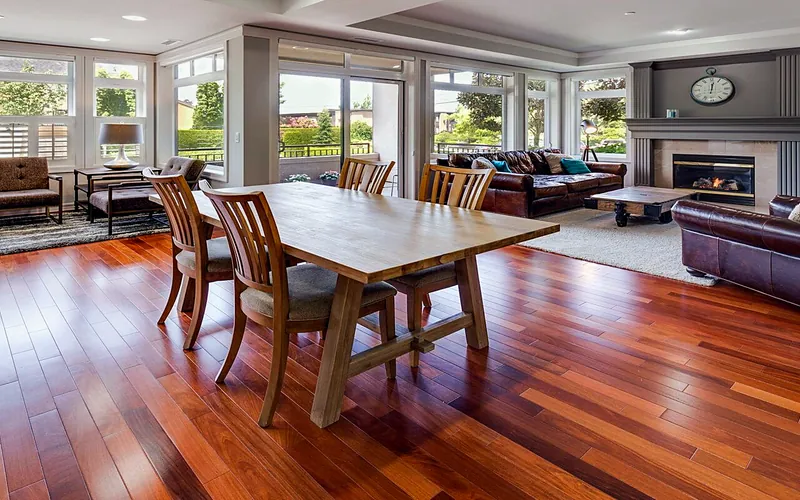
See the relevant families :Laminate flooringLVT vinyl flooringMDF panelling
Technical glossary
The terms and classifications you will read on data sheets, explained simply.
- Classe d’usage (EN ISO 10874)
- Two-digit code: type of premises (2 residential, 3 commercial, 4 industrial) and traffic intensity (1 to 4). E.g. 33 = heavy commercial.
- AC3, AC4, AC5, AC6
- Abrasion resistance classes for laminate (EN 13329). AC4 suits intensive residential or office use; AC5 and AC6 busy retail spaces.
- Bfl-s1, Cfl-s1
- Fire reaction classification for floors (EN 13501-1): Bfl-s1 is the level required in most public buildings.
- R9 à R13
- Slip resistance classes (DIN 51130). R10 suits kitchens and shops; R11 and above wet or greasy areas.
- LVT
- Luxury Vinyl Tile: multilayer vinyl planks and tiles, wood or stone designs, glued or click installation, waterproof.
- PVC homogène / hétérogène
- Homogeneous: a single layer with the same composition throughout, very hard-wearing (hospitals). Heterogeneous: a wear layer over a backing, more designs and comfort.
- Couche d’usure
- Transparent layer protecting the design of a vinyl floor, in mm (0.3 residential, 0.55 commercial, 0.7 heavy).
- Soudure à chaud
- Joining PVC sheets with a melted rod in the seam: continuous, watertight, disinfectable surface.
- Pose clipsée (click)
- Planks assembled by interlocking without glue, on an underlay: fast, removable, ideal for renovation.
- Plancher technique
- 60 × 60 cm tiles on adjustable pedestals, creating a plenum for cables and air conditioning (server rooms, offices).
- Coefficient d’absorption αw
- A ceiling’s ability to absorb sound, from 0 to 1. A rock wool ceiling reaches 0.9 to 1 (class A).
- Fongistatique / antibactérien
- Surface treatment limiting the growth of bacteria and mould; does not replace cleaning, but makes it easier.
 Caring for a laminate floor: the right habits
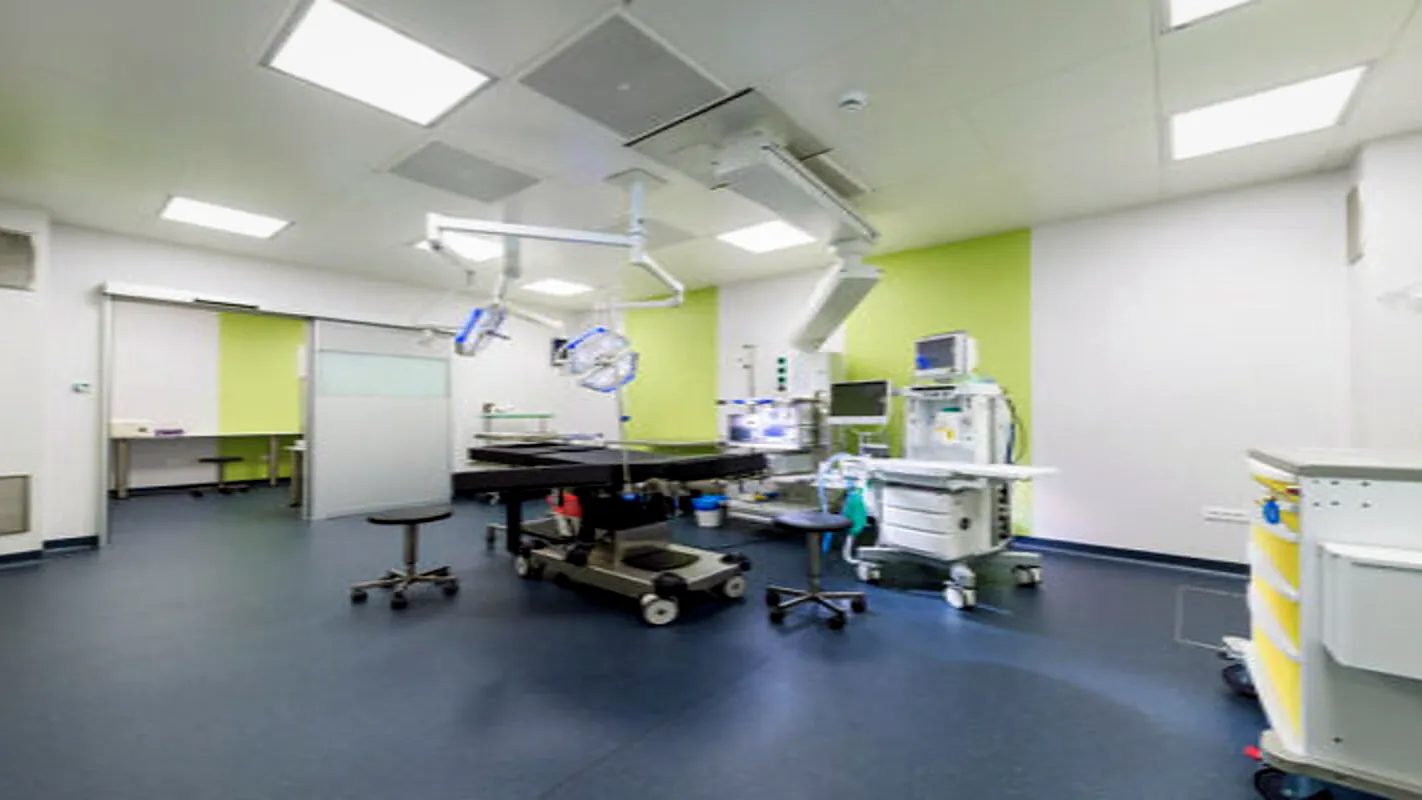 PVC flooring in healthcare: what makes the difference
 Preparing the subfloor: installation starts before the covering
 Offices: treating acoustics through floor and ceiling
A floor, wall or ceiling project?
Describe the premises and surface area: we come back to you with suitable products and a detailed quote, supply and installation included.